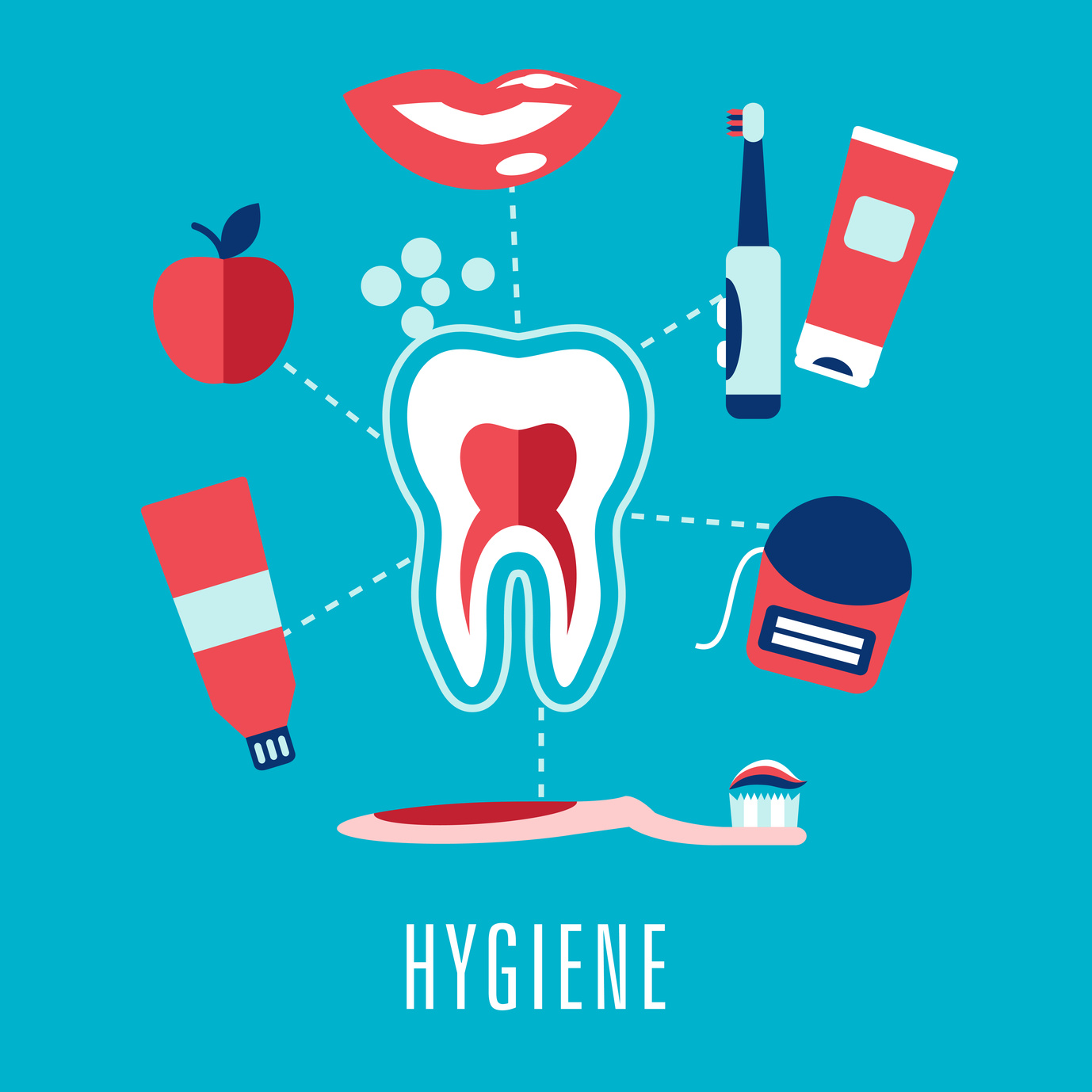
Dental hygiene is the practice of keeping the mouth and the teeth clean to prevent dental problems such as cavities, gum disease, and bad breath. Daily preventative care such as brushing and flossing will greatly enhance the overall health of teeth as well as regularly seeing your dentist or oral hygienist. Maintaining good oral hygiene is one of the most important things you can do for your overall health, breath, and teeth. Daily preventative care will assist in stopping problems that threaten the health of your mouth like gum disease, tooth decay, and cavities. Find out more about what you can do for your dental hygiene.
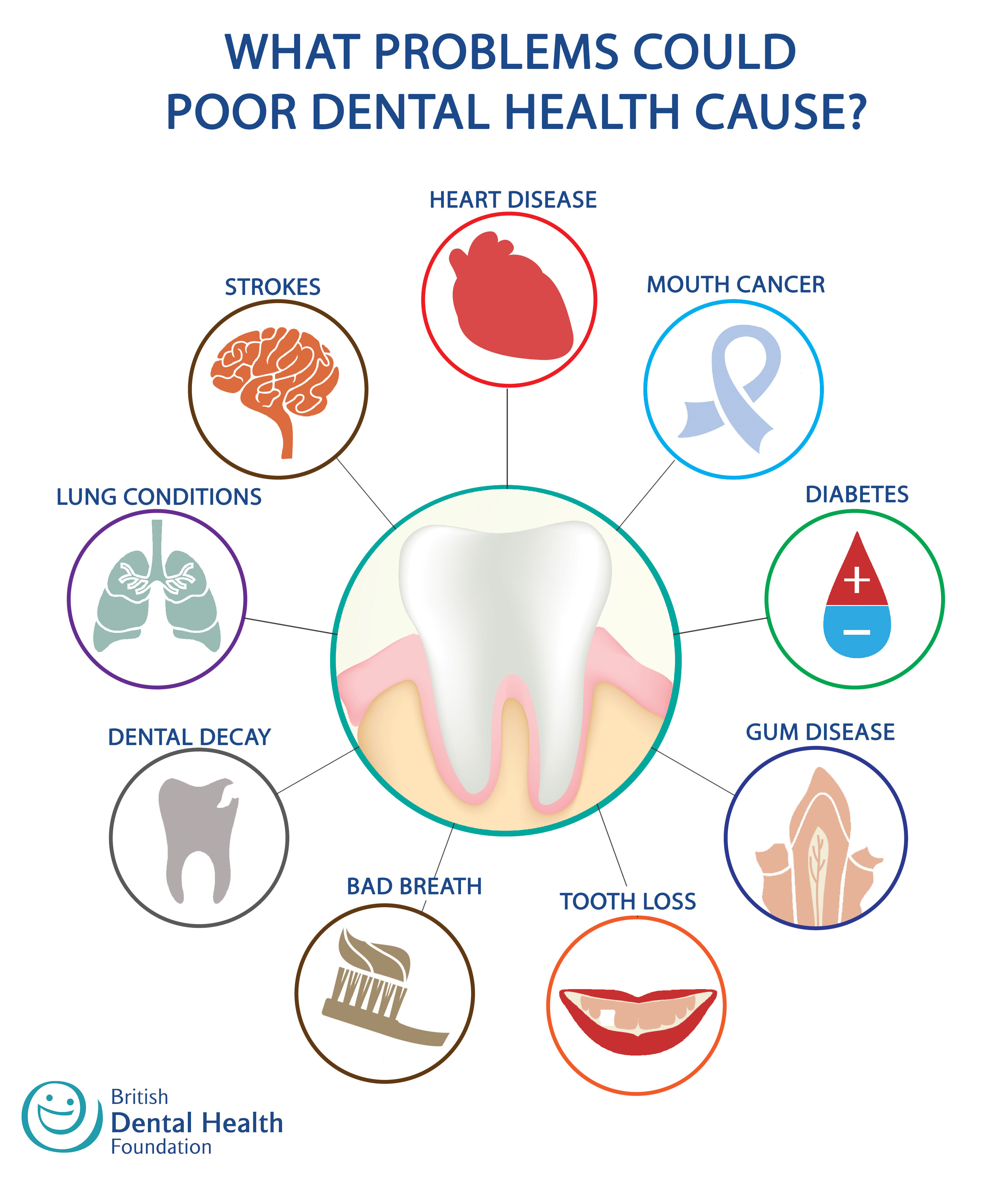
WHAT PROBLEMS COULD POOR DENTAL HEALTH CAUSE?
• Heart Disease
• Mouth cancer
• Diabetes
• Gum Disease
• Tooth Loss
• Bad Breath
• Dental Decay
• Lung Conditions
• Strokes
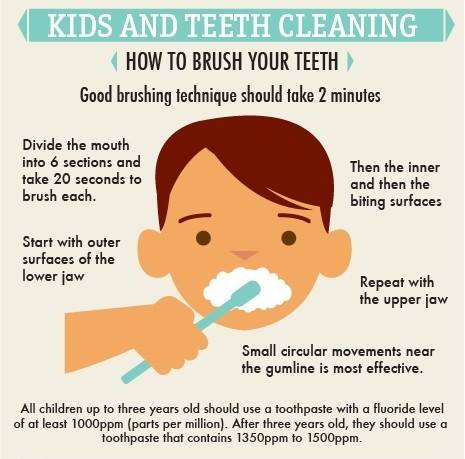
How To Brush Your Teeth
Good brushing technique should take 2 minutes
Divide the mouth into 6 sections and take 20 seconds to brush each.
Start with outer surfaces of the lower jaw
Then the inner and then the biting surfaces
Repeat with the upper jaw
Small circular movement near the gumline is most effective.
All children up to three years old should use a toothpaste with a fluoride level of at least 1000ppm (parts per million). After three years old, they should use a toothpaste that contains 1350ppm to 1500ppm.
.
Lorem Ipsum is simply dummy text of the printing and typesetting industry. Lorem Ipsum has been the industry's standard dummy text ever since the 1500s, when an unknown printer took a galley of type and scrambled it to make a type specimen book. It has survived not only five centuries, but also the leap into electronic typesetting, remaining essentially unchanged. It was popularised in the 1960s with the release of Letraset sheets containing Lorem Ipsum passages, and more recently with desktop publishing software like Aldus PageMaker including versions of Lorem Ipsum.
Lorem Ipsum is simply dummy text of the printing and typesetting industry. Lorem Ipsum has been the industry's standard dummy text ever since the 1500s, when an unknown printer took a galley of type and scrambled it to make a type specimen book. It has survived not only five centuries, but also the leap into electronic typesetting, remaining essentially unchanged. It was popularised in the 1960s with the release of Letraset sheets containing Lorem Ipsum passages, and more recently with desktop publishing software like Aldus PageMaker including versions of Lorem Ipsum.